


What is the Full-to-Full fuel policy in car hire?
The Full-to-Full fuel policy means exactly what it says: you collect the hire car with a full tank and return it the same way. You only pay for the petrol you actually use, at whichever petrol station you choose and at whatever price they charge. It really should be that straightforward.
In our experience managing hire fleets, we’ve found that the fuel gauge on the same model of car can show “Full” with a variation of up to 3–4 litres depending on the gradient of the surface where it’s parked. That seemingly trivial difference is precisely the margin some companies use to apply a refuelling charge.
Compared to the alternatives — “full-to-empty” (you pay upfront for a full tank and return it empty) or “prepay” (you purchase a tank at a fixed price with no refund for unused fuel) — Full-to-Full remains the fairest option, provided you control two variables: when you last filled up and how far you are from the drop-off point.
Table of Contents
How Full-to-Full hire works: the protocol we use internally
- Collecting the vehicle: checking the fuel level sensor
Your first action isn’t to start the engine. It’s to verify the fuel level. In our handover protocol, every vehicle leaves with a digital reading from the fuel level sensor tied to the handover document. But when you collect a car from any provider, that verification is down to you.
Before you sign the hire agreement, locate two specific pieces of information: the price per litre the company will charge you if you don’t return the car full (this can be 50–100% above the forecourt price) and the measurement method they use (visual or electronic). Electronic readings — increasingly common across the industry — are more exacting: they detect level differences that an analogue needle simply wouldn’t register.
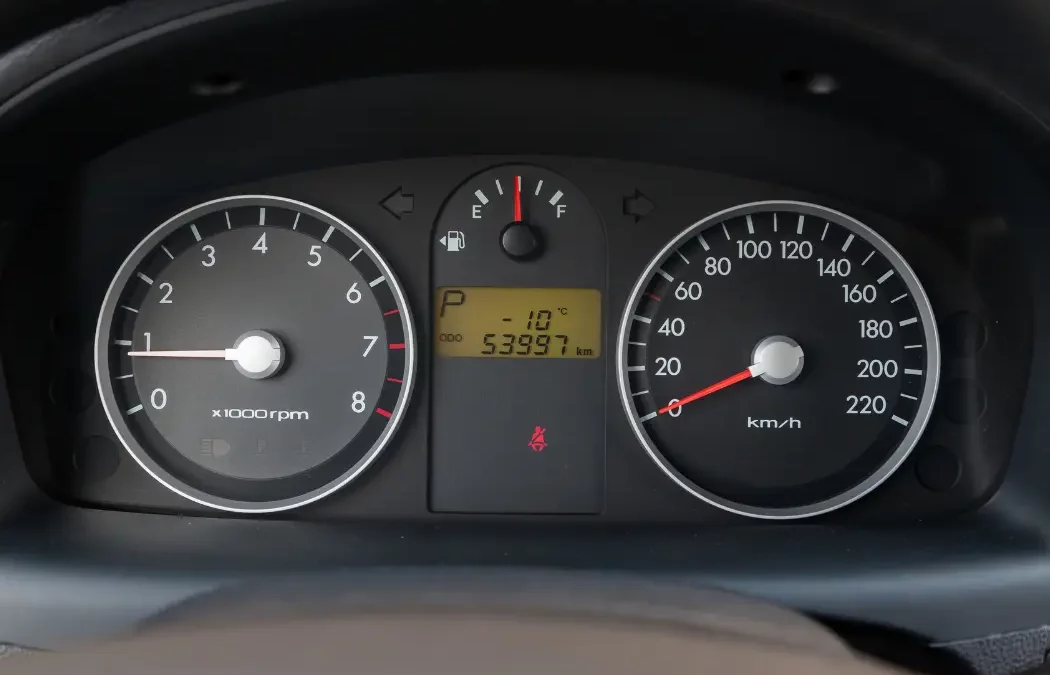
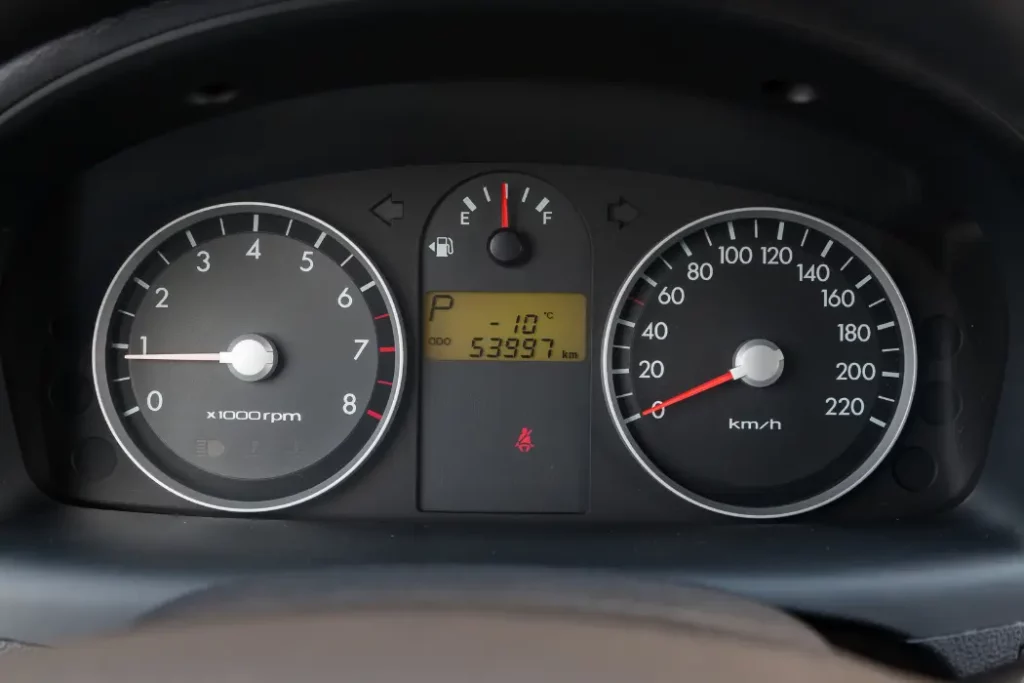
Take a photo that clearly shows the gauge on “Full”, the odometer reading and something identifiable about the car. If the gauge isn’t showing the absolute maximum, don’t accept the vehicle until a member of staff has noted it in writing on the handover document.
Expert tip: Across our fleet, we’ve found that the fuel gauges on certain SUV and MPV models can take up to 2 minutes to stabilise after the engine starts. If you take your photo the moment you turn the ignition, you may capture a reading lower than the actual level. Wait for the display to settle first.
- During your trip: the 3-hour rule for refuelling
The most common mistake we see is last-minute refuelling. Plan to fill the tank at least 3 hours before drop-off. That buffer absorbs genuine unexpected situations: petrol stations closed for a local bank holiday, unexpected queues at the pumps, and the inflated prices at the stations right on the airport perimeter.
If you’re doing a car hire at Málaga Airport, the petrol stations in the nearby industrial estates (such as the Polígono Guadalhorce) operate 24 hours and typically run 8–12% cheaper than the stations immediately surrounding the terminal.
- Returning the car: keep your petrol receipt
Don’t drive miles with a brimming tank to the drop-off point. Fill up at a petrol station between 3 and 8 km away: close enough that the gauge stays on “Full” for the final stretch, but far enough to avoid the premium prices of the stations right beside the airport.
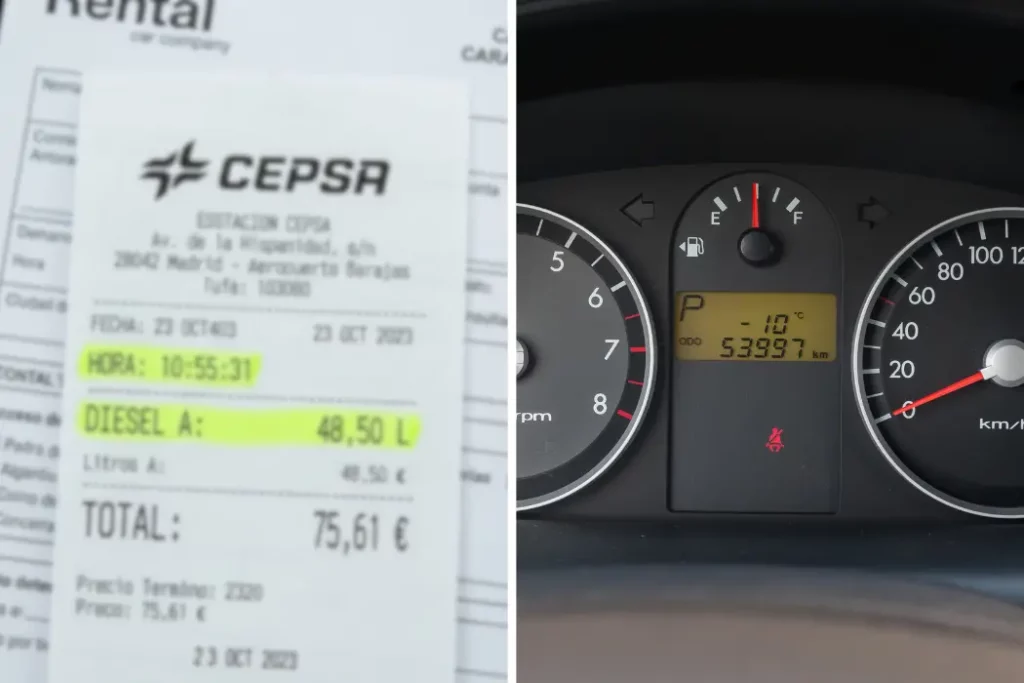
Keep your receipt (date, time, litres, location) and take a second photo of the gauge once you’re already on the hire company’s premises. This is essential if you want to avoid losing your fuel deposit (the credit card hold the company places at the start of the hire as security). Ask the agent to confirm the fuel level in writing on the returns form. If you’re dropping off outside opening hours (key drop), send an email with your photos and receipt to the company before you hand over the keys, quoting your booking reference. Without this precaution, an out-of-hours return is a gamble.
Full-to-Full vs Full-to-Empty vs Prepay: which fuel policy should you choose?
The choice you make here can mean more than £50 difference on your final bill. This table reflects the real-world scenarios we deal with every day — not the simplified version you’ll find on most booking sites.
| Policy | What you actually pay | Real financial risk | When it makes sense |
|---|---|---|---|
| Full-to-Full | Only the fuel you use, at the forecourt price | High if you fail to refuel: refuelling fee plus inflated price per litre | Trips over 200 miles with time to fill up before drop-off |
| Full-to-Empty | A full tank at the company’s price, with no refund | Low on extra charges, but you pay for fuel you don’t use | Short hires (24–48 hours) with an early-morning flight or express return |
| Prepay | Full tank at a fixed price when booking, non-refundable | Moderate: you lose unused fuel, but it removes admin on the day | Business travel where a fixed cost matters more than saving money |
| Same-level return | You return with the same level as collected | High due to imprecision: any variation triggers a charge | Almost never worth it. Only if you collect with a very low tank |
What nobody tells you: The “same-level return” policy generates the highest proportion of complaints. The reason is technical: fuel level sensors have a margin of error of ±5%, which means returning the car “at exactly the same level” is, in practice, a lottery. If a company offers it to you, ask yourself why.
Refuelling fees and penalties: what it actually costs not to return the tank full
The charge isn’t simply “the cost of the missing petrol”. It’s a three-part formula that hire companies apply, and it’s worth understanding before it shows up on your bank statement.
Understanding these charges is important, but there are other billing tactics you should be aware of too. We’d recommend reading our full guide on spotting and avoiding common car hire scams before signing any agreement.
The three components of the charge:
- Estimated missing litres. The measurement isn’t precise. A gauge reading “just below Full” can translate into an estimated shortfall of 5 to 10 litres. In our experience with fleet sensors, that estimate tends to favour the company by an additional 2–3 litres.
- The company’s price per litre. This is where the real overcharge lies. Internal rates typically run 30–100% above the retail pump price. A litre that costs £1.35 at a petrol station may be billed at £1.90–£2.40 on your invoice.
- Administrative refuelling fee. A fixed charge of between £13 and £26 for the “service” of sending someone to fill the car up. It appears on your statement as “refuelling service” or “fuel service fee”.
Example with real figures:
| Item | If you refuel yourself | If the company does it |
|---|---|---|
| 12 litres missing at forecourt price (£1.35/litre) | £16.20 | — |
| 12 litres missing at company rate (£1.90/litre) | — | £22.80 |
| Administrative refuelling fee | £0 | £16.00 |
| Total | £16.20 | £38.80 |
A difference of over £22 for not taking 10 minutes to stop at a petrol station. Given holiday stress, we understand how it happens — but it’s entirely avoidable.
Watch the small print: If you booked through a third party (a broker or aggregator), the fuel policy that applies is the one set by the company that physically hands you the keys — not the website where you made your reservation. Always check the terms of the operating company directly.
The real pros and cons of Full-to-Full
| In favour | Against |
|---|---|
| You only pay for what you use, at the price you choose. No estimates, no opaque tariffs. | Early-morning flights: If you’re departing at 5:00–6:00 AM, finding an open petrol station near the airport can be a genuine problem. |
| Full control over your fuel spend. You know exactly what you’ve paid — it’s on your receipt. | Areas with few petrol stations. Smaller airports or rural drop-off points may have the nearest station 10+ km away. |
| Ideal for longer trips where you’ll use most of the tank and refuelling en route is natural. | The penalty for failing is disproportionate. The charge for not returning the car full isn’t just for the fuel — it includes an admin fee on top. |
| A transparent principle: no hidden calculations, no non-refundable prepaid deposits. | It adds a logistical step at the most stressful moment of the trip: returning the car before your flight. |
When NOT to choose Full-to-Full: If your return flight is before 7:00 AM, if you’re dropping off at a remote location, or if you’re travelling with young children and the logistics of that final fill-up could unravel. In those cases, a Full-to-Empty policy buys something priceless: peace of mind in the last few hours of your holiday.
Checklist for returning the car without losing your fuel deposit
Before you hand over the keys, run through this list. Each point addresses a real dispute we’ve seen either resolved cleanly — or made far more complicated — by a single detail.
- Petrol receipt in hand. With a legible date, time, number of litres and location. A vague or generic receipt without those details won’t hold up as evidence.
- Refuelled within the contract’s specified radius. Many providers specify a maximum of 5–10 km from the drop-off point. If you filled up further away, they may argue that fuel was consumed getting back, bringing the level down.
- Photo of the fuel gauge. Taken once the car is already parked on the company’s premises, showing “Full” alongside something identifiable such as the number plate or the office signage.
- Check the price per litre in your contract. Confirm what you’d be charged if you hadn’t refuelled. Knowing that figure gives you the context to challenge any subsequent claim.
- Get the agent to verify and sign. Insist that a member of staff notes on the returns form that the tank is full. That signed document is your strongest protection.
- Photo of the odometer. Records the final mileage to prevent any dispute about where you refuelled or how far you drove afterwards.
- If it’s a key drop: send an email with your evidence. Attach photos of the gauge, your receipt and the number plate to the company’s email address before leaving the keys, quoting your booking reference. Without this step, an out-of-hours return is a bet you could easily lose.
If you can’t refuel: a contingency plan
Sometimes the plan falls apart. The petrol station you’d planned to use is closed, your flight leaves in 90 minutes and there’s no time to find another. In that case, document everything.
Take a photo of the closed station’s opening hours sign. At the returns counter, ask whether they can charge you for the missing fuel at a pre-agreed rate there and then — this is usually cheaper than the administrative charge they’d apply days later when the car is inspected.
If the subsequent charge seems disproportionate, submit a formal complaint with all your documentation attached. In Spain, the local Citizens Advice equivalent (OMIC) or the European Consumer Centre (ECC-Net UK) are the institutional routes if the company fails to respond.
Expert tip: Before you set off, identify at least one 24-hour petrol station on your route back to the drop-off point. Two minutes on Google Maps or an app like Waze is all it takes. Those two minutes could save you more than £35.
Frequently asked questions about fuel in hire cars (FAQ)
What exactly is the Full-to-Full policy?
It’s the most common arrangement in vehicle hire: you collect the car with a full tank and agree to return it in the same condition. If you don’t, the company charges you for the missing fuel at their internal rate — significantly above the forecourt price — plus an administrative fee for the refuelling service.
Full-to-Full, Full-to-Empty or Prepay: which is right for me?
It depends on your logistics, not just the price in isolation. Full-to-Full is the most cost-effective option if you have time to fill up near the drop-off point. Full-to-Empty makes sense when your priority is removing that final logistical step — very early flights, travelling with children, or a stressful end to the trip. Prepay only makes sense if you need a fixed, agreed cost from the moment you book, such as on a business trip with a pre-approved travel budget.
What is a fuel deposit or fuel hold?
An amount the company temporarily holds on your credit card as security against a potential refuelling charge. The figure varies by provider and by the size of the car’s tank. It’s calculated on the estimated cost of filling the tank completely at the company’s internal rates — not at the forecourt price. That’s why the hold is usually higher than what it would actually cost you to fill up yourself.
Do I have to keep my petrol receipt?
It’s not always an explicit contractual requirement. In practice, it’s your only physical proof that you complied with the policy. Without that receipt, any dispute over the fuel level will be decided in the company’s favour. Keep it until the final hire charge appears as settled on your bank statement.
How do I find cheap petrol near the airport?
Avoid the stations on the direct approach roads to the terminal. Drive 3–8 km in the opposite direction and use a live price comparison app such as Waze or GasBuddy. Petrol stations in nearby industrial estates and residential areas consistently run cheaper than those on the airport perimeter.
